logo logo
Fund the truth. #Wethecivic giving banner
Donate
    • Membership
    • Donate
  • Social Justice
    • Racial Justice
    • Climate Justice
    • Disability Justice
    • Economic Justice
    • Food Justice
    • Health Justice
    • Immigration
    • LGBTQ+
  • Civic News
  • Nonprofit Leadership
    • Board Governance
    • Equity-Centered Management
    • Finances
    • Fundraising
    • Human Resources
    • Organizational Culture
    • Philanthropy
    • Power Dynamics
    • Strategic Planning
    • Technology
  • Columns
    • Ask Rhea!
    • Ask a Nonprofit Expert
    • Gathering in Support of Democracy
    • Hope in the Dark
    • Humans of Nonprofits
    • Inside the States
    • In Defense of Civil Society
    • The Myth of Heroic Leadership
    • The New Harvest Project
    • Notes from the Frontlines
    • Notes from the Long Arc
    • Reimagining Philanthropy
    • The Unexpected Value of Volunteers
    • We Stood Up
  • Newsletters
  • NPQ Online Events
    • Premium Webinars
    • Learn Out Loud
    • Partner Events
    • On Demand
  • Leading Edge Membership

It’s the [Nonprofit] Economy, Stupid.

Rick Cohen
February 27, 2008

Economic Stimulus: The economic stimulus bill that staggered through Congress recently somehow missed the role of the nonprofit sector with its 7.2 percent share of the nation’s employment. Would other nations debate economic stimulus without consideration of the role of their “voluntary sector” organizations? We think not. The debate among economists concerned what actions and what investments would actually jumpstart the increasingly moribund U.S. economy, and nonprofits should have a lot to say about that. But some national nonprofit trade associations viewed the nonprofit role more narrowly than they might have, suggesting that the stimulus package add in an extension of the IRA charitable rollover and do something to enhance charitable donations of food. That struck us as odd. There are lots of good debate points for charitable giving incentives, but they don’t fit the elements of what goes into economic stimulus legislation. So this issue of CR includes some touchpoints about the nonprofit sector’s role in economic stimulus.

Endowment Spending: The January issue of CR reviewed a report on a few foundations willing to go above the 5 percent minimum spending requirement, the private foundation mandatory “payout” floor that many foundations have turned into a spending ceiling. But private foundations are not the only large institutions with billions of dollars in tax exempt endowments. The Senate Finance Committee under Montana’s Max Baucus and Iowa’s Charles Grassley have turned their gaze to the payouts of nonprofit university and hospital endowments, particularly the former. The big universities sit on so much and pay out so little that they make 5 percent payout foundations look like spendthrifts. A little Senate attention has caused a couple of the elite universities to make some changes in their payouts, though it is unclear how much of this is legitimate policy change or simply blindingly moving the cards around the table like a game of three card monte.

Who Benefits: On the hospital side, we couldn’t have been more impressed with the stories emanating from CBS 11 News KTVT-TVin Austin, Texas, not simply because the reporter called on CR for some on-air commentary. The reporter stumbled across information suggesting that the nonprofit hospital was providing a different level of attention and indulgence to people of wealth and status. The hospital — UT Southwestern — has been less than happy with the reporter’s dogged pursuit of the facts behind policies and expenditures that most of us wouldn’t imagine occurring at a nonprofit hospital. A for-profit hospital, maybe, but a nonprofit? No wonder state attorneys general, the U.S. House of Representatives, the U.S. Senate, and the Internal Revenue Service have been questioning exactly how nonprofit some nonprofit hospitals really are. With a peek at the UT Southwestern scandal, this CR further sharpens the point to that question.

Sign up for our free newsletters

Subscribe to NPQ's newsletters to have our top stories delivered directly to your inbox.

By signing up, you agree to our privacy policy and terms of use, and to receive messages from NPQ and our partners.

Tell us what you think. What should the nonprofit sector be adding to the economic stimulus policies of Congress and the White House that would constitute real stimulus? Should nonprofit universities have a minimum payout requirement like private foundations? Is there something wrong with the UT Southwestern practices of offering an “A-list” of patients special access and providing expensive — we mean expensive! — party favors for wealthy donors? CR would like to know.

Rick

Our Voices Are Our Power.

Journalism, nonprofits, and multiracial democracy are under attack. At NPQ, we fight back by sharing stories and essential insights from nonprofit leaders and workers—and we pay every contributor.

Can you help us protect nonprofit voices?

Your support keeps truth alive when it matters most.
Every single dollar makes a difference.

Donate now
logo logo logo logo logo
About the author
Rick Cohen

Rick joined NPQ in 2006, after almost eight years as the executive director of the National Committee for Responsive Philanthropy (NCRP). Before that he played various roles as a community worker and advisor to others doing community work. He also worked in government. Cohen pursued investigative and analytical articles, advocated for increased philanthropic giving and access for disenfranchised constituencies, and promoted increased philanthropic and nonprofit accountability.

More about: OpinionPolicyThe Cohen Report
See comments

Sidebar-WTC
You might also like
Two Hundred and Fifty Years of Gunfire (Commentary)
Jaclyn Corin
They Wept Before the City Knew
Yahia Lababidi
A Letter to the World: From a Young Palestinian Man, To a World Where I and My City Will Be Eradicated
Yahia Lababidi and Mohammed Abu Lebda
We Did Not Come Here to Celebrate, We Came to Build
Linda Sarsour, Carmen Perez-Jordan and Saru Jayaraman
Thousands of Species Wait for Protection as Delays Grow Under Endangered Species Act
Rajeev Tyagi
Community Benefit Agreements: A Tool for Building Stronger Democracies
Sameera Fazili, Pronita Gupta and Doug Bloch

Upcoming Webinars

Group Created with Sketch.
July 16, 2:00 pm ET

Readying for the 2026 Midterms

How 501(c)(3)s Can Educate and Advocate During this Election Season

Register
Group Created with Sketch.
August 13, 2:00 pm ET

Building Narrative Power for Equity and Solidarity

Register

    
You might also like
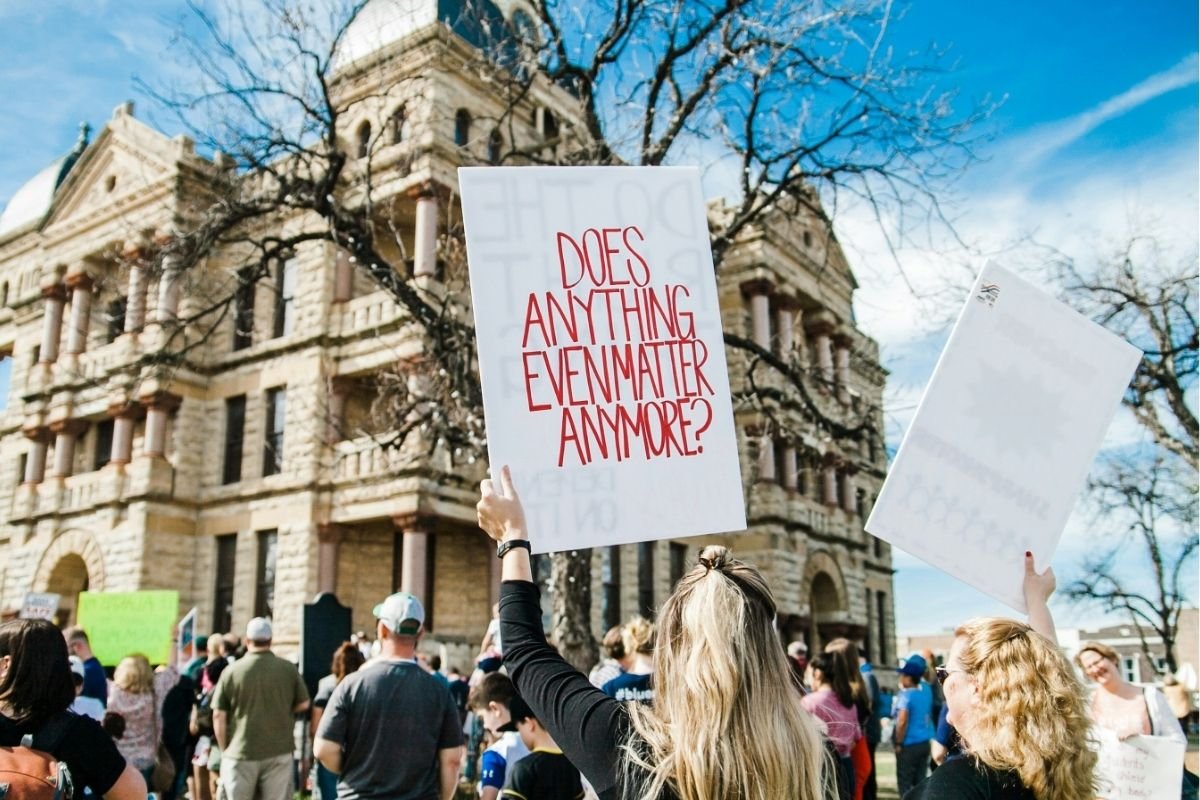
A protester holds a handwritten sign reading "Does anything even matter anymore?" above a crowd gathered outside a government building.
Two Hundred and Fifty Years of Gunfire (Commentary)
Jaclyn Corin
A cluster of blue, 6-petaled forget-me-not flowers, a symbol of rememberance and memory.
They Wept Before the City Knew
Yahia Lababidi
A bombed out building in the heart of Rafah, Palestine, where author Mohammed Abu Lebda is from.
A Letter to the World: From a Young Palestinian Man, To a...
Yahia Lababidi and Mohammed Abu Lebda

Like what you see?

Subscribe to the NPQ newsletter to have our top stories delivered directly to your inbox.

See our newsletters

By signing up, you agree to our privacy policy and terms of use, and to receive messages from NPQ and our partners.

  • About
  • Advertise
  • Careers
  • Contact
  • Copyright
  • Donate
  • Funders
  • Editorial Policy
  • Media Relations
  • Privacy Policy
  • Submissions

We are using cookies to give you the best experience on our website.


Nonprofit Quarterly | Civic News. Empowering Nonprofits. Advancing Justice.
Powered by  GDPR Cookie Compliance
Privacy Overview

This website uses cookies so that we can provide you with the best user experience possible. Cookie information is stored in your browser and performs functions such as recognising you when you return to our website and helping our team to understand which sections of the website you find most interesting and useful.

Strictly Necessary Cookies

Strictly Necessary Cookie should be enabled at all times so that we can save your preferences for cookie settings.