

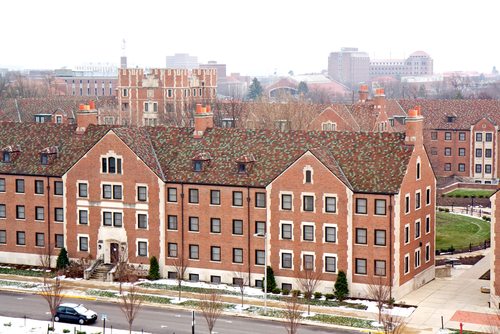
 Some readers were surprised in our story last week about the Clintons’ speaking fees by the notion that colleges and universities might be interested in paying big dollars to politicians for speeches in the hope that they’ll help the schools along when they need access to federal agencies for federal R&D grants. This list, compiled from the online databases of the Center for Responsive Politics, suggests that some of the big universities in the U.S. are more than willing to pay out big dollars for federal lobbyists with the same target—access to federal administrators and decision-makers.
Universities Pay Plenty for Influence and Access through Lobbying

 Amid growing international challenges, the UN and NGO response to crises is called “slow,” “cumbersome,” and “absent” by Doctors Without Borders.
 The word “drones” brings to mind unmanned vehicles launching deadly attacks, typically on terrorism targets such as the leaders of Al Qaeda and organizations like it. Some companies are working up prototypes of drones to deliver humanitarian aid, rather than missiles.
 A Texas-based international nonprofit with Baptist roots is hopeful that by the fall, it will have the necessary city approval to open an intake facility for immigrants in a former hotel in Weslaco.
 Are you in the process of completing IRS Form 1023? Stop the presses!
 Combining a mutual love of science, innovation, and early twentieth-century inventor Nikola Tesla, technology magnate and billionaire Elon Musk has responded to an appeal from web artist Matthew Inman and agreed to donate a million dollars toward the creation of a museum honoring the early twentieth-century inventor.
 There is a long and brutal history of overinstitutionalization in the United States, but we know that deinstitutionalization without a strong investment in proper community supports has had its own terrible effects. So what do we do now?
 Famed cyclist and survivor Lance Armstrong says he wants to honor his commitment to fight cancer, and if Livestrong doesn’t want his efforts, he may strike out to start another charity on his own.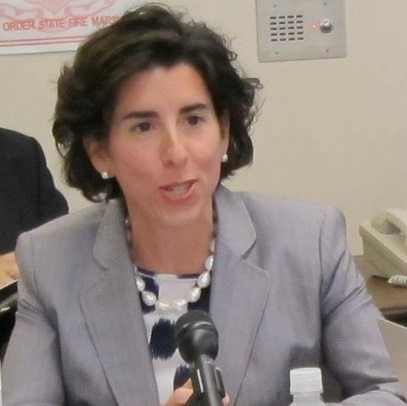
 The involvement of Crossroads Rhode Island into Gina Raimondo’s campaign to become governor raises questions about IRS prohibitions against 501(c)3 nonprofits supporting candidates for partisan public office.
 Detroit’s Department of Water and Sewerage seems to have had a disproportionate share of problems—problematic billing, leaking water pipes, inadequate communications with customers, etc.—leading up to the current crisis of nearly indiscriminate shutoffs of residential water customers. Some observers speculate that Detroit Water’s sudden “get-tough” policy toward delinquent customers is really a precursor for readying the public utility for sale to a private entity.