


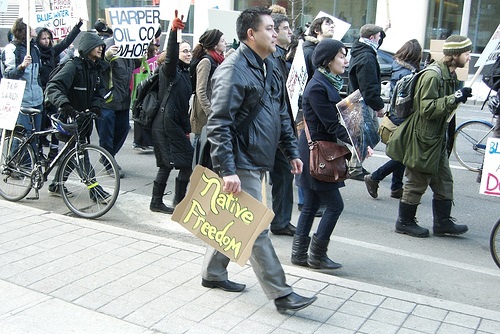
 As hearings continue in the U.S. about how the Internal Revenue Service mucked up its reviews of the 501(c)(4) applications of Tea Party organizations, north of the border the Canada Revenue Agency is conducting politically questionable audits of Canadian environmental groups that oppose the government’s policies on oil and gas extraction and shipping.
Questionable Audits of Environmental Charities by Canada Revenue Agency
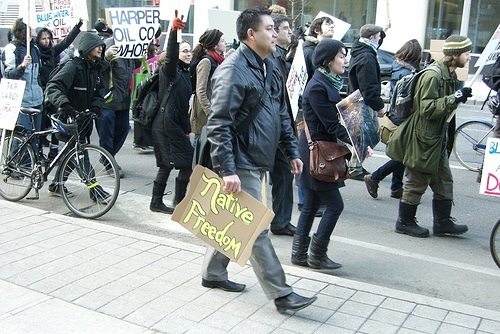
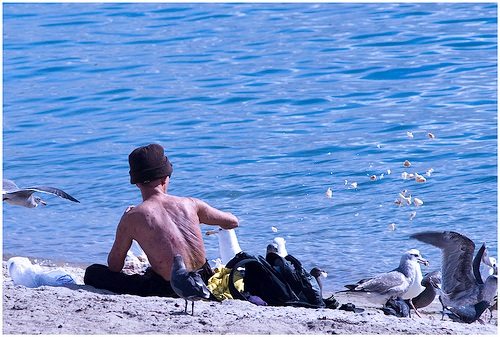
 San Diego’s interim mayor proposes redirection of funding now being spent on year-round shelters.
 For a startup nonprofit in Charleston, S.C., crowdfunding, cross-sector collaboration, and creative reuse may prove to be a winning combination.
 While Washington languishes in the freezing cold of this winter, leaving Congress and the White House unable to agree on much of anything in the job creation arena, state governments are coming up with innovative ideas for creating new jobs. Just remember that press conferences and speeches are one thing, but nonprofits have to closely monitor the governors’ projections of job growth.
 Mayor Martin J. Walsh has appointed John Barros to a brand-new position as Boston’s chief of economic development.

 GOP House members suspect that proposed IRS rules governing 501(c)(4) social welfare groups published in late 2013 were actually developed “off books” in 2011 and 2012.
 While the appointment raises some eyebrows, the unpaid position is an arrangement not unprecedented in the history of America’s first ladies.
 After AOL CEO Tim Armstrong announced a plan to cut back on employee retirement benefits, he was widely lambasted on social media for his truly bogus effort to blame the policy proposal on financial problems due to Obamacare and two “distressed babies” covered in the company’s health insurance plan. It is difficult to imagine that nonprofit CEOs would have stooped so low.
 A budget shortfall at UC Berkeley led to a campus-wide assessment of institutional priorities and an innovative funding plan for the future of its library.
 A new guidebook from Glasspockets shows foundations how to be more transparent about their work, and what benefits would come from that.
 Proposed changes that would decrease the role of the Canadian government in promoting electoral turnout seem to match some voting rights debates here in the U.S.